
OBOS Living Lab
Oslo
2025
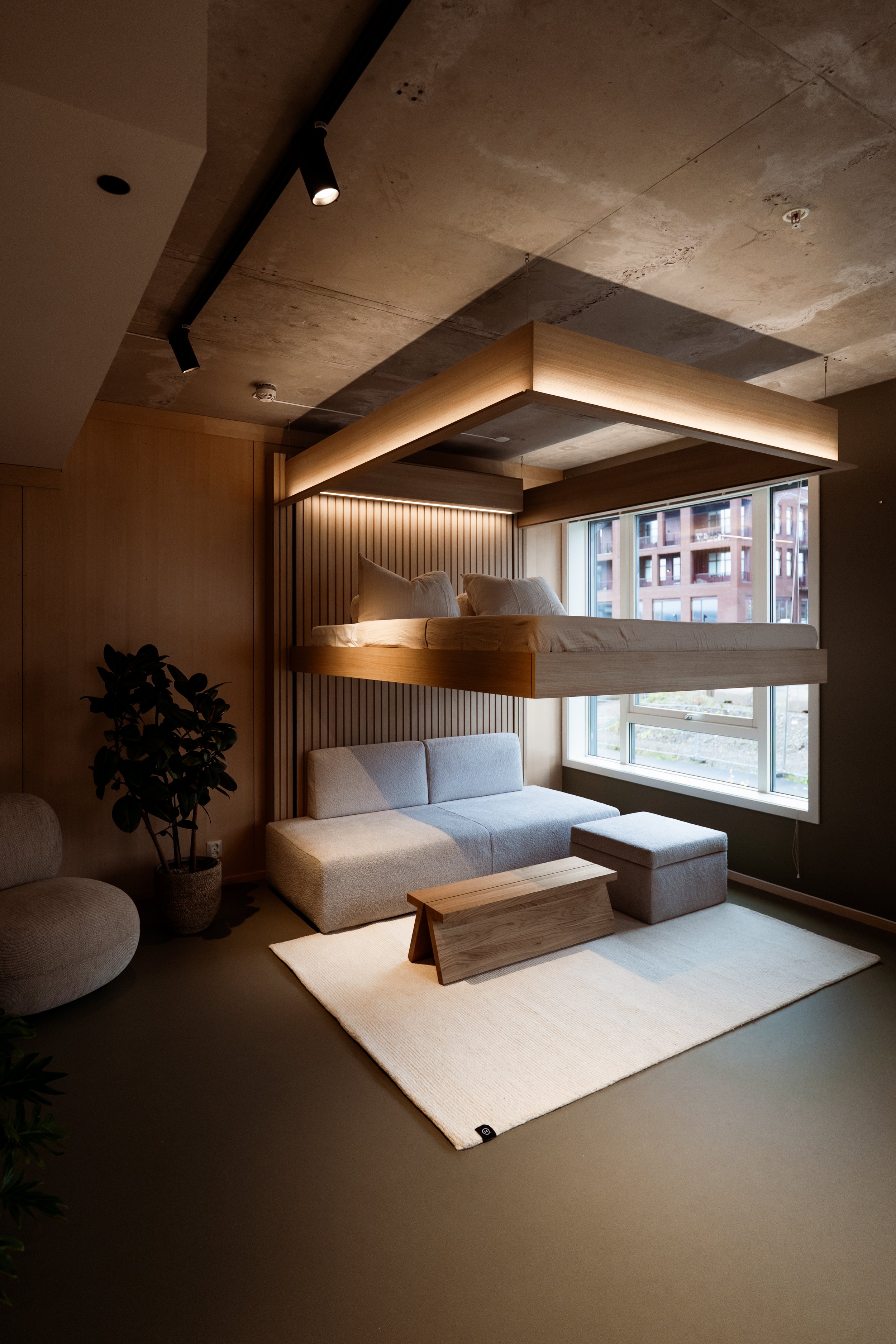
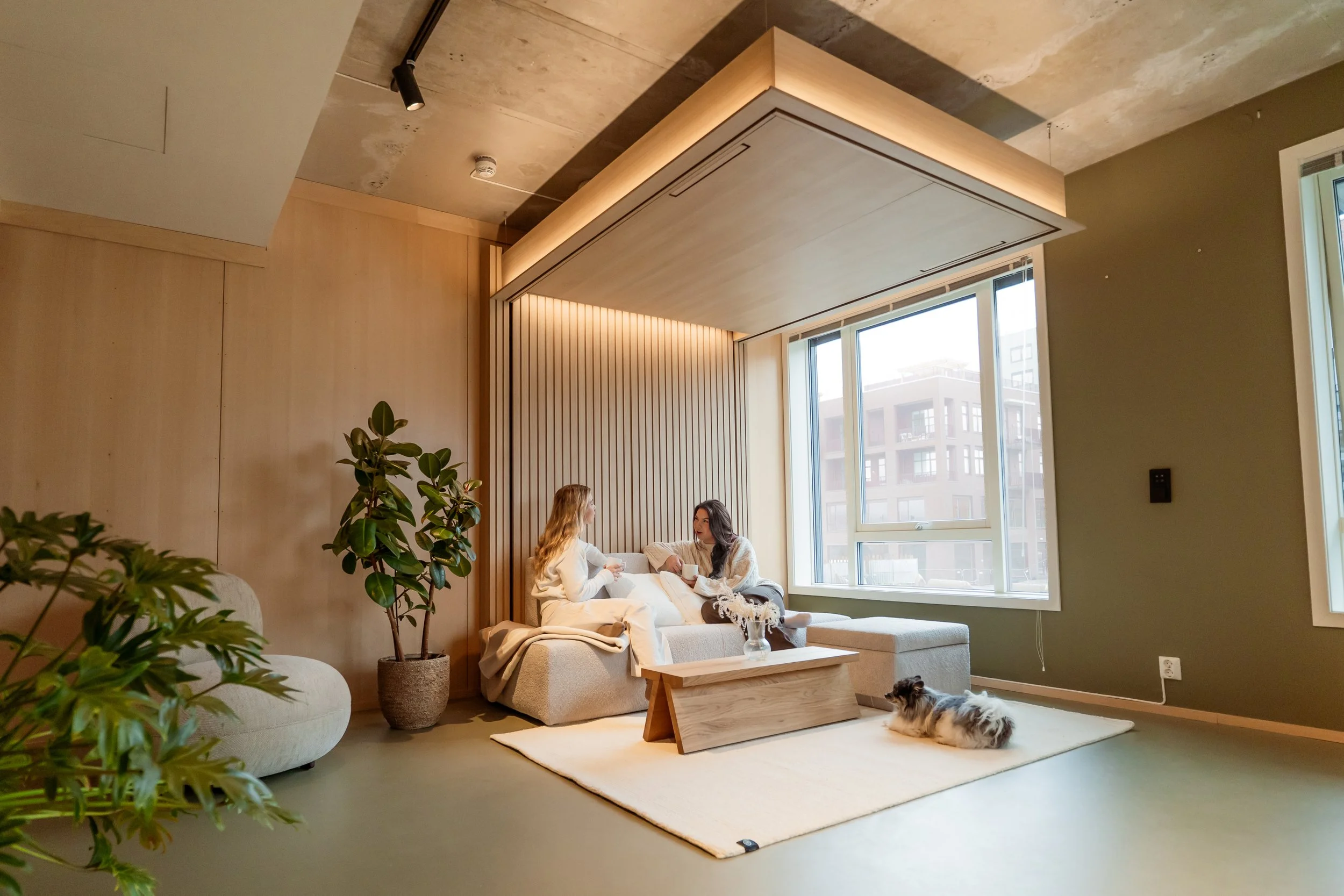
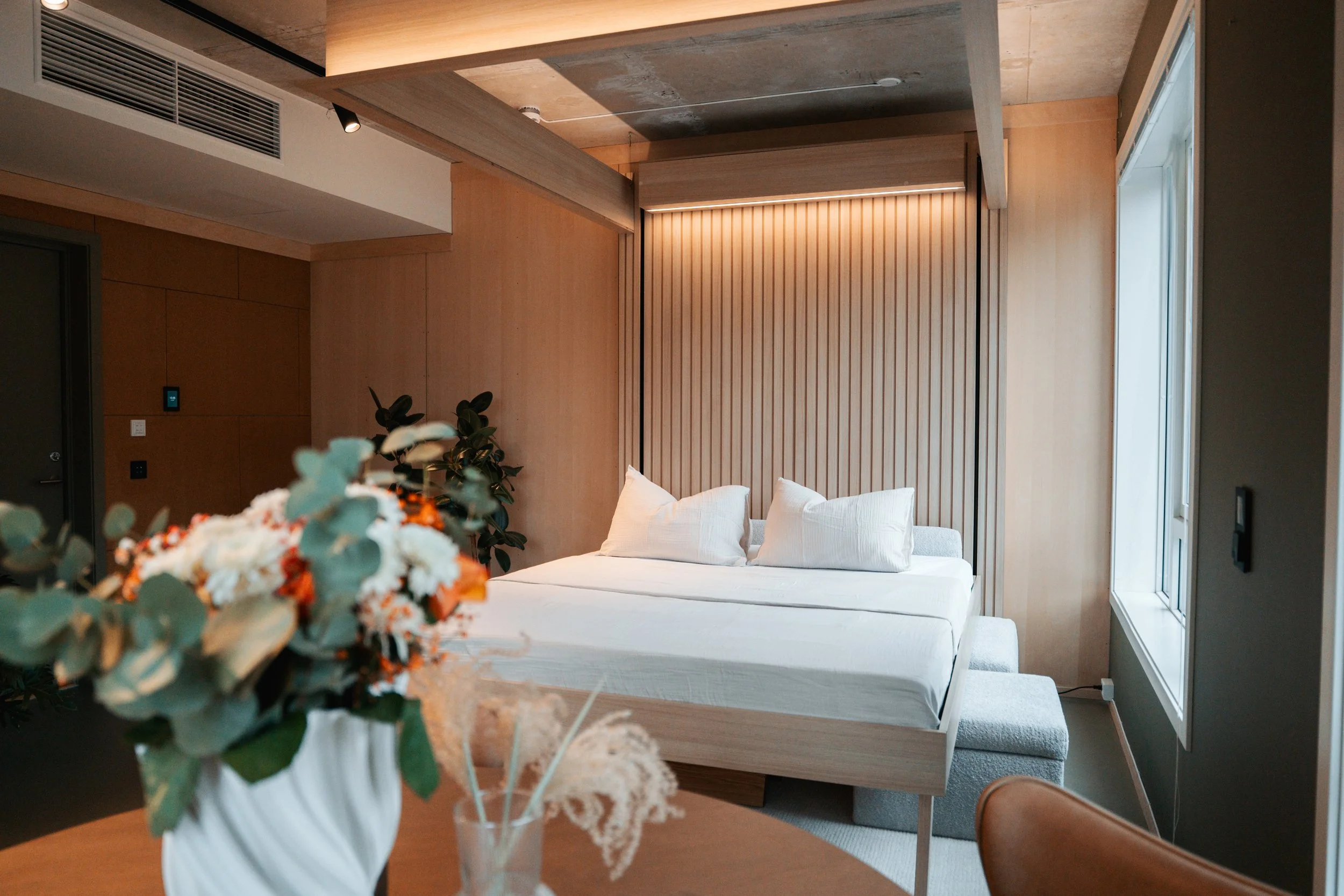
MASE is partnering with OBOS as a technology partner, testing its robotic space-saving solutions at OBOS Living Lab in Vollebekk, Oslo, as part of “Bo Kompakt: live smaller, live more.” In a 27 m² apartment, the project explores how compact living can still feel high-quality through smart, flexible rooms. In the project, MASE Bed is tested, a robotic, ceiling-mounted bed that frees floor area so the same square meters can support different activities across the day. Together with OBOS, MASE is testing ways to lower the barrier to homeownership, and what quality of living means in an urban setting.
-
![An image of the MASE Bed]()
01
-
![An image of the MASE Bed.]()
02
-
![An image of the MASE Bed.]()
03

Key insights from the project
01
Compact homes can work well
To make compact homes work better, developers should take greater responsibility for partially furnishing units with smart solutions from the start.
02
Clear zones improve living quality
When sleeping and living areas are clearly separated residents report better living quality.
03
Social settings are important
Flexible furniture and adaptable space make it easier for a home to support both daily life and social gatherings.
About the OBOS Bo Kompakt projectWhat if the home of the future wasn’t about size, but freedom?
Research from OBOS Living Lab suggests that compact living works when every square meter works harder: with clear zones, smart storage, and flexible, selective furnishing that support everyday life. The result is a home that feels bigger, functions better, and gives people more freedom in less space.